

Before the Passover celebration, Jesus knew that his hour had come to leave this world and return to his Father. He had loved his disciples during his ministry on earth, and now he loved them to the very end. 2 It was time for supper, and the devil had already prompted Judas, son of Simon Iscariot, to betray Jesus. Jesus knew that the Father had given him authority over everything and that he had come from God and would return to God. So he got up from the table, took off his robe, wrapped a towel around his waist, and poured water into a basin. Then he began to wash the disciples’ feet, drying them with the towel he had around him.
When Jesus came to Simon Peter, Peter said to him, “Lord, are you going to wash my feet?”
Jesus replied, “You don’t understand now what I am doing, but someday you will.”
“No,” Peter protested, “you will never ever wash my feet!”
Jesus replied, “Unless I wash you, you won’t belong to me.”
Simon Peter exclaimed, “Then wash my hands and head as well, Lord, not just my feet!”
Jesus replied, “A person who has bathed all over does not need to wash, except for the feet, to be entirely clean. And you disciples are clean, but not all of you.” For Jesus knew who would betray him. That is what he meant when he said, “Not all of you are clean.”
After washing their feet, he put on his robe again and sat down and asked, “Do you understand what I was doing? You call me ‘Teacher’ and ‘Lord,’ and you are right, because that’s what I am. And since I, your Lord and Teacher, have washed your feet, you ought to wash each other’s feet. I have given you an example to follow. Do as I have done to you. I tell you the truth, slaves are not greater than their master. Nor is the messenger more important than the one who sends the message. Now that you know these things, God will bless you for doing them.Tyndale House Publishers. (2015). Holy Bible: New Living Translation (Jn 13:1–17). Tyndale House Publishers.
In Jesus, we see the ultimate form of servant leadership. You may think washing someone’s feet was bad. Imagine being God and deciding to become human. Being eternal and still experiencing death. Being omniscient and becoming a babbling baby. His entire life on earth was about service to the people He created in His image. This specific moment is important because it highlights the end of His journey to the cross. After this meal, He will go and pray so fiercely that Luke writes “[Jesus] prayed more fervently, and he was in such agony of spirit that his sweat fell to the ground like great drops of blood.” (Luke 22:44, NLT). Before He went to agonize over his fate on the cross, He washed feet.
Most of us tend to look inwards during hard circumstances. We may look to those hurting more than us or to those in the trenches with us. Despite this John 13:15, 1 John 2:6, Ephesians 5:1-2, and Philippians 2:5 all give us the instruction to be like Jesus. Leading up to Jesus sacrificing Himself on the cross, His focus remained solely on the people of this world. Jesus came to the world giving up His throne, yet He did not cower or hide—He served. This is our example.
But the time is coming—indeed it’s here now—when you will be scattered, each one going his own way, leaving me alone. Yet I am not alone because the Father is with me. I have told you all this so that you may have peace in me. Here on earth you will have many trials and sorrows. But take heart, because I have overcome the world.”
Tyndale House Publishers. (2015). Holy Bible: New Living Translation (Jn 16:32–33). Tyndale House Publishers.
To be like Jesus must be to face trials and sorrows knowing He has overcome the world. It is not to avoid trials and sorrows. It is not to avoid the hard things in life. It is not to hide and wait for the rapture. It is not to stop sharing the Gospel to avoid contact with “worldly” people. First-century Jewish culture frowned on many of the things Jesus did! The answer to bad things in this world and our lives is not to check out like it is your last day before PTO. Despite Paul warning about this nearly two-thousand years ago, it is still the default position of some people.
Watch and pray! Be prepared, like the five wise virgins who made sure they had extra oil in their lamps (Matthew 25:13). The Church is soon to leave the world. We are seeing signs of the end of this age.
Hagee, J. (2013). Four blood moons: Something is about to change. Worthy Publishing, p. 270.
What Jesus meant by being prepared was not having your bags packed and arriving to the airport two hours early. It is much more in line with what Romans 12 says than watching and waiting. We don’t get to twiddle our thumbs and point out signs.
“If your enemies are hungry, feed them. If they are thirsty, give them something to drink. In doing this, you will heap burning coals of shame on their heads.”
Tyndale House Publishers. (2015). Holy Bible: New Living Translation (Ro 12:20). Tyndale House Publishers.
In Hagee’s book, he talks about the modern enemies of Israel, using them as a sign of the end times. What Paul tells us to do in Romans is to feed those enemies. To give them something to drink. Our enemies are not exempt from the command to love our neighbors.
Yet we hear that some of you are living idle lives, refusing to work and meddling in other people’s business. We command such people and urge them in the name of the Lord Jesus Christ to settle down and work to earn their own living. As for the rest of you, dear brothers and sisters, never get tired of doing good.
Tyndale House Publishers. (2015). Holy Bible: New Living Translation (2 Th 3:11–13). Tyndale House Publishers.
I am confident that Hagee and others like him would argue that what they do is their work. Writing a book that scares people into accepting Christ is not a good work, nor does it accurately preach the Good News. If all we were called to do was watch and wait, then the New Testament can be a lot shorter! We could just start each Gospel at these verses Matthew 26:47, Mark 14:43, Luke 22:47, and John 18:1. Luke could’ve tacked the first eleven verses of Acts onto his Gospel. Skip the rest of Acts and the epistles before concluding with Revelation! Even Hagee knows this isn’t true. He quotes a parable about being ready. He knows those verses are important. He knows that Jesus and the Apostles weren’t doing all of this for no reason. Yet rhetoric centered on watching the signs and preparing to leave can draw our attention away from the work Jesus plainly gave us to do while we are still here: loving and serving our neighbors.
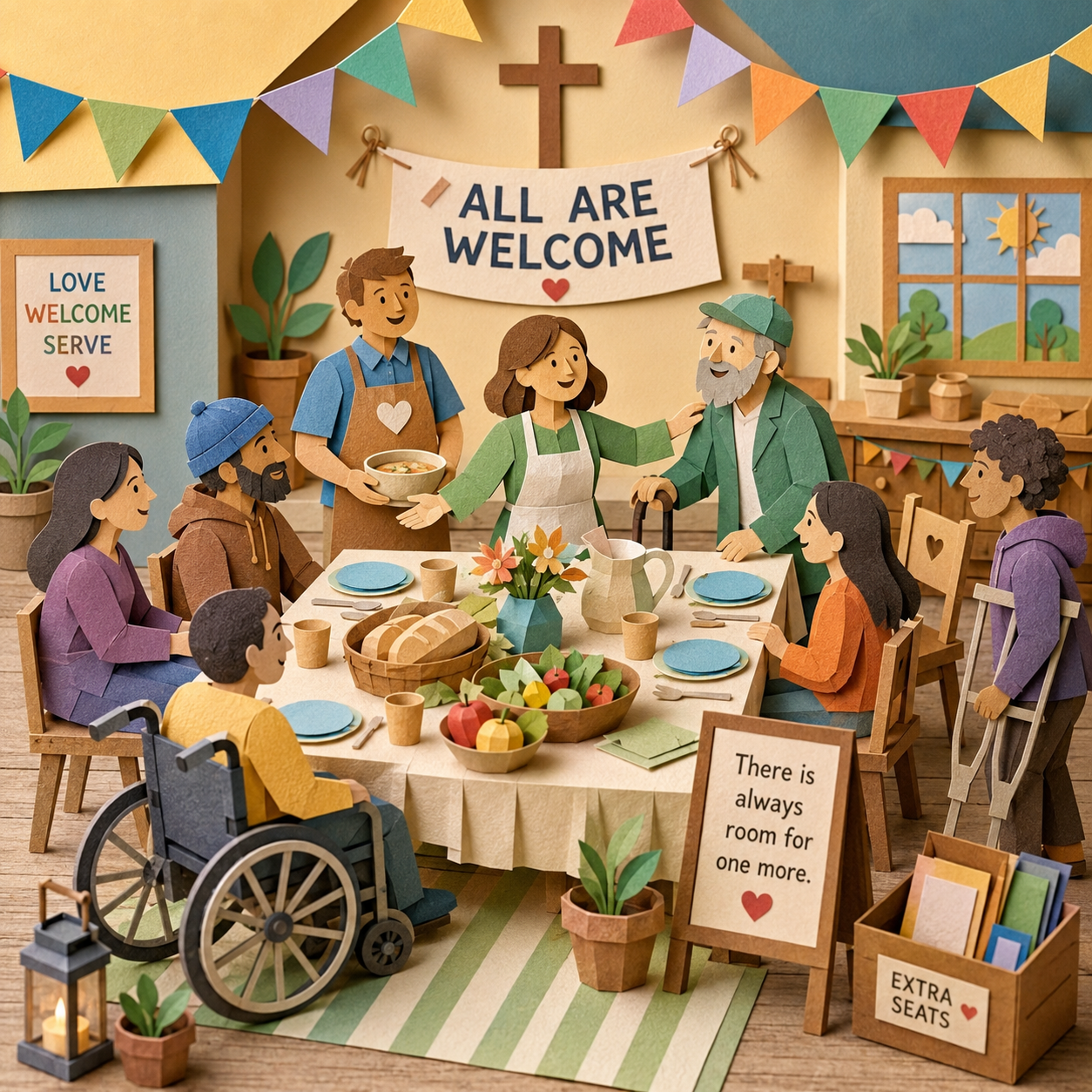
Service is never about us. That is what Jesus taught us when He washed His disciple’s feet.
Is the world fair? No. Is my life easy? No. My joy doesn’t come from either of those things. It comes from the serving the Lord of Heaven and Earth. Doing the Father’s will makes me want to continue to do so. I find my joy and my peace doing what Jesus would do. My theology is not rooted in eschatology; it is rooted in the service mindedness of my Savior. Does your path dictate whether you serve those made in the image of the Lord or will you serve regardless?


Leave a Reply